SCIENCE
Hemp and other fibre crops can draw heavy metals out of polluted farmland, a review finds
Chinese and Greek researchers gathered the evidence on hemp, flax, ramie, kenaf and jute as crops that clean metal-polluted soil while still being worth harvesting.
Drafted with AI, edited by Hemp'in
Hemp'in
9 November 2026 · 3 min read
The research
Application of Bast Fiber Crops in the Remediation of Heavy Metal Contaminated Farmland in China: A Review was published on 30 October 2026 in the Journal of Natural Fibers. The authors are Qiu Cai Sheng, Kang Qing Hua, Xuan Zhu, Zhong Yi Sun, Qiu Hua Jiao, Xi Xia Song, Chen Xiaoyan, Song Hua Long, Dan Yao, Xin Lin Zhao, Zhi Min Wu, Eleni G. Papazoglou and Yu Fu Wang. They work at the Chinese Academy of Agricultural Sciences, the Heilongjiang Provincial Academy of Agricultural Sciences and the Agricultural University of Athens. The paper is open access, so anyone can read it in full.
This is a review. The team did not run a new experiment. They gathered and summarised research that already exists, most of it from China.
What they did
The starting point is a problem the authors call serious and global: farmland polluted with heavy metals. Heavy metals such as cadmium or lead can build up in soil from mining, industry or some fertilisers. They do not break down. The authors frame it as a threat to food security and human health.
One way to clean such soil is phytoremediation, which means using plants to do the work. Some plants pull metals out of the ground through their roots and store them in their stems and leaves. When the plants are harvested, part of the metal leaves the field with them.
The best-known metal-collecting plants, called hyperaccumulators, have drawbacks, the review says. Many grow little biomass (not much plant material per field), have no market value, and cope poorly outside the conditions they like.
So the authors looked at another group: bast fibre crops. These are plants grown for the strong fibres in their stems. The review covers flax, industrial hemp, ramie, kenaf and jute. It sums up what is known in China about how heavy metals affect their growth, how much metal they take up, how they tolerate it, where in the plant the metal ends up, and how they have been used on polluted farms in practice.
What they found
According to the review, bast fibre crops tolerate heavy metals well, grow a lot of biomass, are already well understood by farmers, and can still be sold.
The authors report that their bioaccumulation and translocation factors are generally higher than 1 for certain heavy metals. A bioaccumulation factor compares the metal in the plant with the metal in the soil. A translocation factor compares the metal in the shoots with the metal in the roots. A value above 1 means the plant holds more than the soil around it, or moves more of it up into the parts that get harvested.
The review concludes that research and field practice point to broad prospects for these crops in cleaning polluted farmland in a sustainable way.
What it means, and what it doesn't
The appeal is easy to see. A farmer could grow a crop that slowly cleans the soil and still earn something from it, instead of leaving the land idle.
The limits matter just as much. This is a summary of other studies, not new measurements, and it focuses on China. The abstract says the factors are above 1 for certain metals, not for all of them, and it does not say here which metals or which crop does best. The abstract gives no timescale or cost for cleaning a field.
We also infer, rather than read in the abstract, one practical question: fibre grown on polluted land carries the metals it collected. What happens to that harvest needs its own care. Seed or leaves from such a field would not belong in food.
We only report research and make no promises. This is not agricultural or health advice.
Words to know
Heavy metals: metals such as cadmium and lead that can be toxic and stay in soil for a long time.
Phytoremediation: using plants to remove or hold pollution in soil or water.
Bast fibre: the long, strong fibre found just under the outer skin of stems like hemp and flax.
Translocation factor: how much metal a plant moves from its roots up into its shoots.
How did this land?
Ask the desk
The conversation
Open in LIFENo one has replied yet. Start the conversation.
WRITE FOR HEMP'IN
Have a story from the hemp industry?
Join Hemp'in and publish your own articles to everyone who reads News.
MORE FROM HEMP'IN NEWS
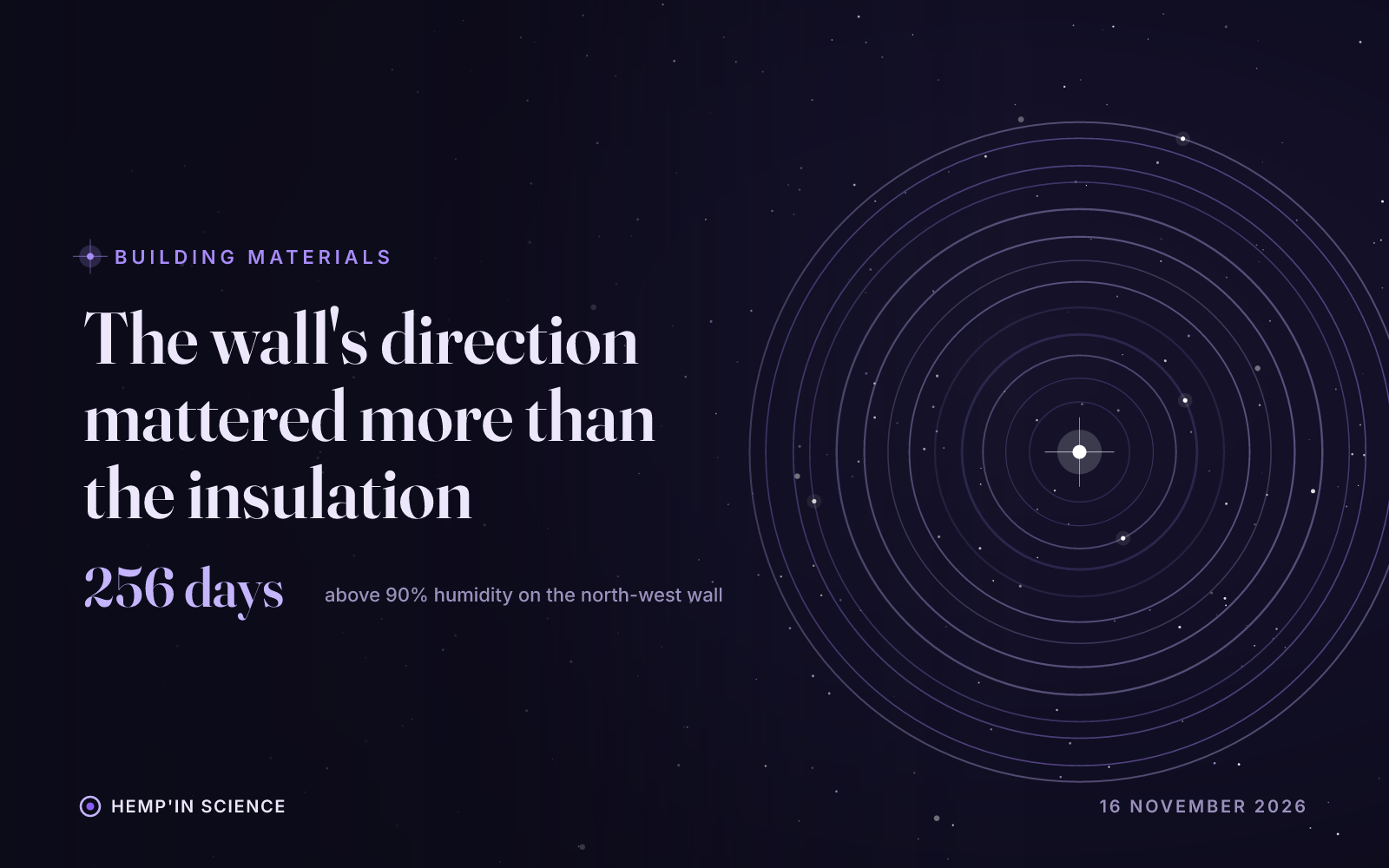
A wall's direction mattered more than its insulation, a year in an old French building shows
Hemp'in · 16 November 2026
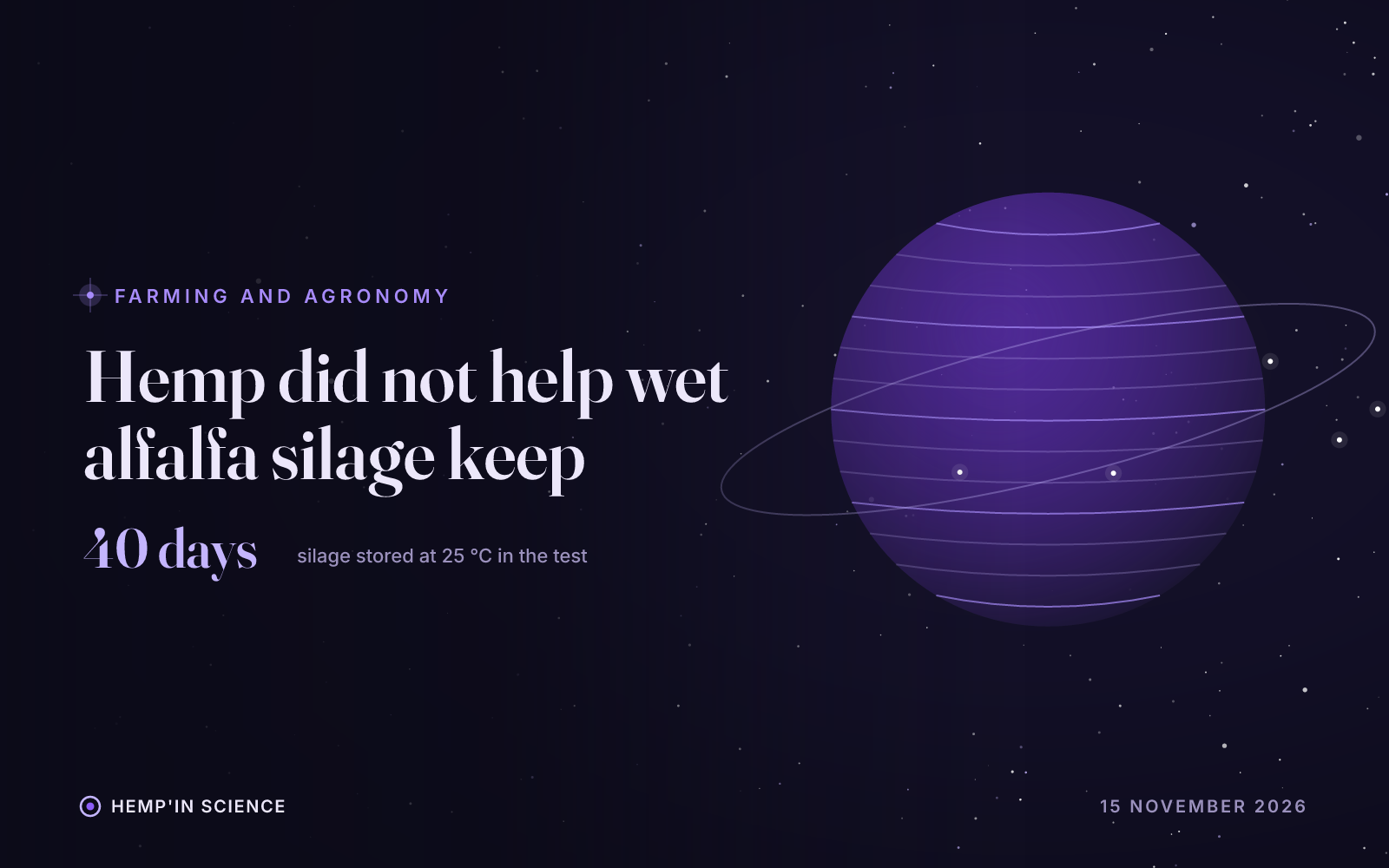
Hemp oil and ground hurd did not improve wet alfalfa silage, but orange powder did, a study finds
Hemp'in · 15 November 2026
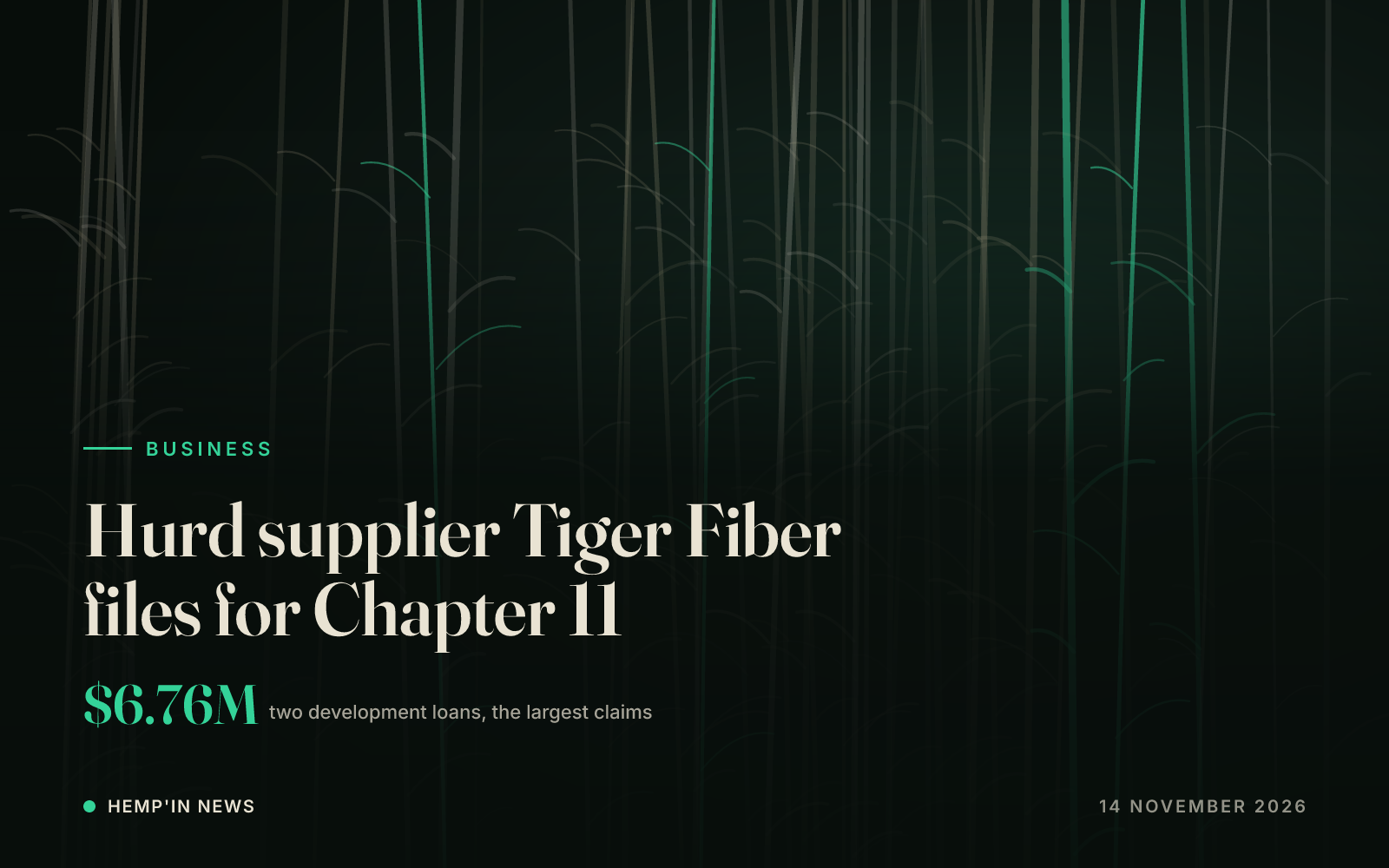
Hemp hurd processor Tiger Fiber files for Chapter 11 and keeps operating
Hemp'in · 14 November 2026
